The build · The tools
I can't code. The app is 158,000 lines of Swift.
MassBuilder is written by an AI on my decisions. This is how that works in practice: the tools, the workflow, what I say to it, where your data goes and what breaks.
 Oskar Ege · · 5 min read
When I started twenty months ago I couldn't do interfaces, user experience, programming, architecture or databases. I got better with every attempt. AI got better even faster, and the gap between those two curves is the whole explanation for why the app exists.
Two ways of building
2025: the chat window
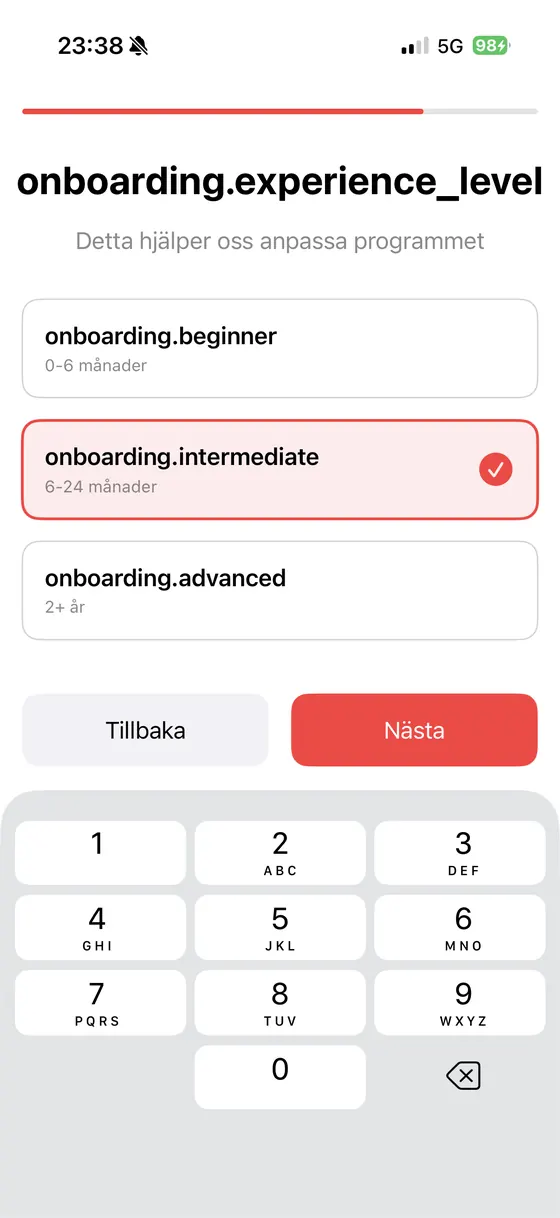
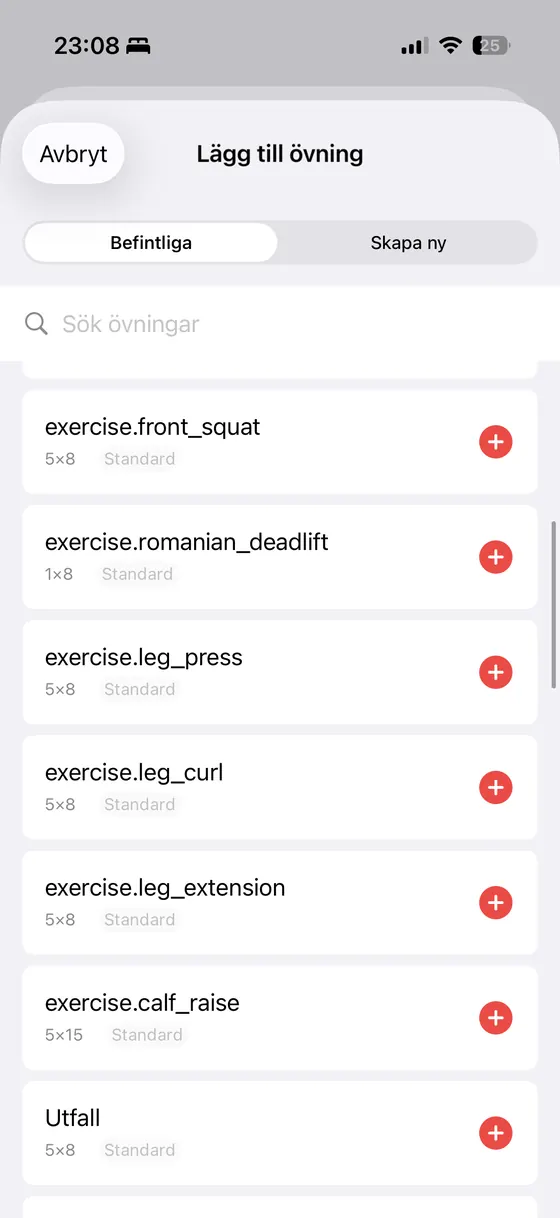
I described what I wanted, the AI wrote code, Xcode answered with error messages and I carried them back. The app showed the code's own names instead of text. I asked for colour themes and got so many errors that I called it off. After six weeks WillTrack was on the App Store, with the log stored in a way that made it disappear if you changed phones.
2026: the agent
Now I work in Claude Code. It is still a conversation, but the AI doesn't sit in a window next to the work. It reads the whole repository, writes the code, builds the app, runs the tests, starts the app in a simulator, takes screenshots, looks at them and fixes what went wrong. It fills in the store page with Apple and uploads the build. I decide what gets built, try it on my own phone and say yes or no.
The numbers as a table
| Week | Commits |
|---|---|
| wk 40 | 47 |
| wk 41 | 17 |
| wk 42 | 175 |
| wk 43 | 218 |
| wk 44 | 197 |
| wk 45 | 226 |
| wk 46 | 103 |
Source: the git history of the app's repository, counted November 12, 2026.
- 983 commits in six weeks
- 158,742 lines of Swift in the app
- 2,080 automated tests
- 0 third-party libraries in the app
Of the 983 commits, 899 were written with Claude Opus 5.5 and 70 with Claude Fable 5.2, according to the signature in each commit.
What I say to it
I don't write technical specifications. I write like this, in Swedish:
make it cheeky … it's allowed to go quite far off the rails
About the app's judges, October 14, 2026
go for import from as many as you can find
About reading in logs from other apps, October 14, 2026
you get to be my style guide now … red pen should be a thing
About how the app looks, October 15, 2026
Everything in one version. Version number 2.0 it is, because this version plays in a different league from the last one.
October 2026
Sentences like that are enough not because the AI guesses well, but because the project has a memory. Three files carry it: one that says what the app should be, one that says where the build stands right now and one that lists every decision with its date and reason. The one describing the current state is more than 2,000 lines long, and every working session starts with the AI reading them.
The rules
- Nothing is uploaded to Apple without my yes.
- Every change has tests. The app has more than 2,000, and they run before anything counts as done.
- Several AI instances can work at the same time, but one of them owns the whole and merges the others' work.
- If two instances are working in the same files, one of them stops and asks me.
What the app is built from
Only Apple's own frameworks: SwiftUI for the interface, SwiftData and CloudKit for the log, HealthKit for Health, Vision for the camera that counts reps, RealityKit for 3D and ActivityKit for the Lock Screen. No third-party libraries, no analytics and no ad code.
The typefaces are open typefaces. The site you are reading uses five of them, all under the SIL Open Font License.
Where your data goes
Your log is stored on your devices and in your own iCloud. There is no account with me, and I can't see your training.
Two parts of the app use my server, and both say so when you turn them on: the AI in Fuel, and Coach, which is for personal trainers. When you ask Fuel to read a meal, the words or the photo go to the server, which passes them on to Claude, a model from Anthropic, and the server doesn't store the meal. A barcode you scan is looked up in the open database Open Food Facts. Nothing from your log and nothing from Health is sent. It is all in the privacy policy.
What breaks
The AI is not a flawless engineer. It is a fast and tireless colleague that sometimes makes confident mistakes.
- The price. On November 10 it ran an upload script that put a one-dollar price on an app that was supposed to be free. That is in the post about the pricing mistake.
- The crash. The first workout I ran with the new effort scale crashed the app twice, and the watch with it.
- The false alarm. Once it reported that syncing with iCloud had never worked. That wasn't true, and it corrected itself after measuring on my phone.
- Apple. The biggest obstacle hasn't been technical. That is in the post about the spam verdict.
What catches the mistakes is the same as in any build: tests, a second review and someone actually using the app. That someone is me, at the gym.
Can you do the same?
Yes, with one reservation. The tool writes the code, but it doesn't know what makes a good workout app. I knew that after twenty-four years of training, and it still took me three attempts to get it out. Start with something you know a lot about, and expect the first attempt to be ugly.
Questions and answers
- Is MassBuilder built with AI?
- Yes. The code is written by Claude, an AI model from Anthropic, in the tool Claude Code. Oskar Ege decides what the app should do, tries it and approves what ships.
- Which tools are used?
- Claude Code, Xcode, Swift and SwiftUI, and only Apple's own frameworks in the app: SwiftData and CloudKit, HealthKit, Vision, RealityKit and ActivityKit.
- Can you build an app without knowing how to code?
- This is one example of it. What you can't skip is knowing what the app should be, trying it yourself and having tests that catch the mistakes.
- Where is my workout log stored?
- On your devices and in your own iCloud. Oskar Ege cannot see it. The exceptions are in the privacy policy.